

Flying With Skis: Bring Your Gear or Rent on Arrival?
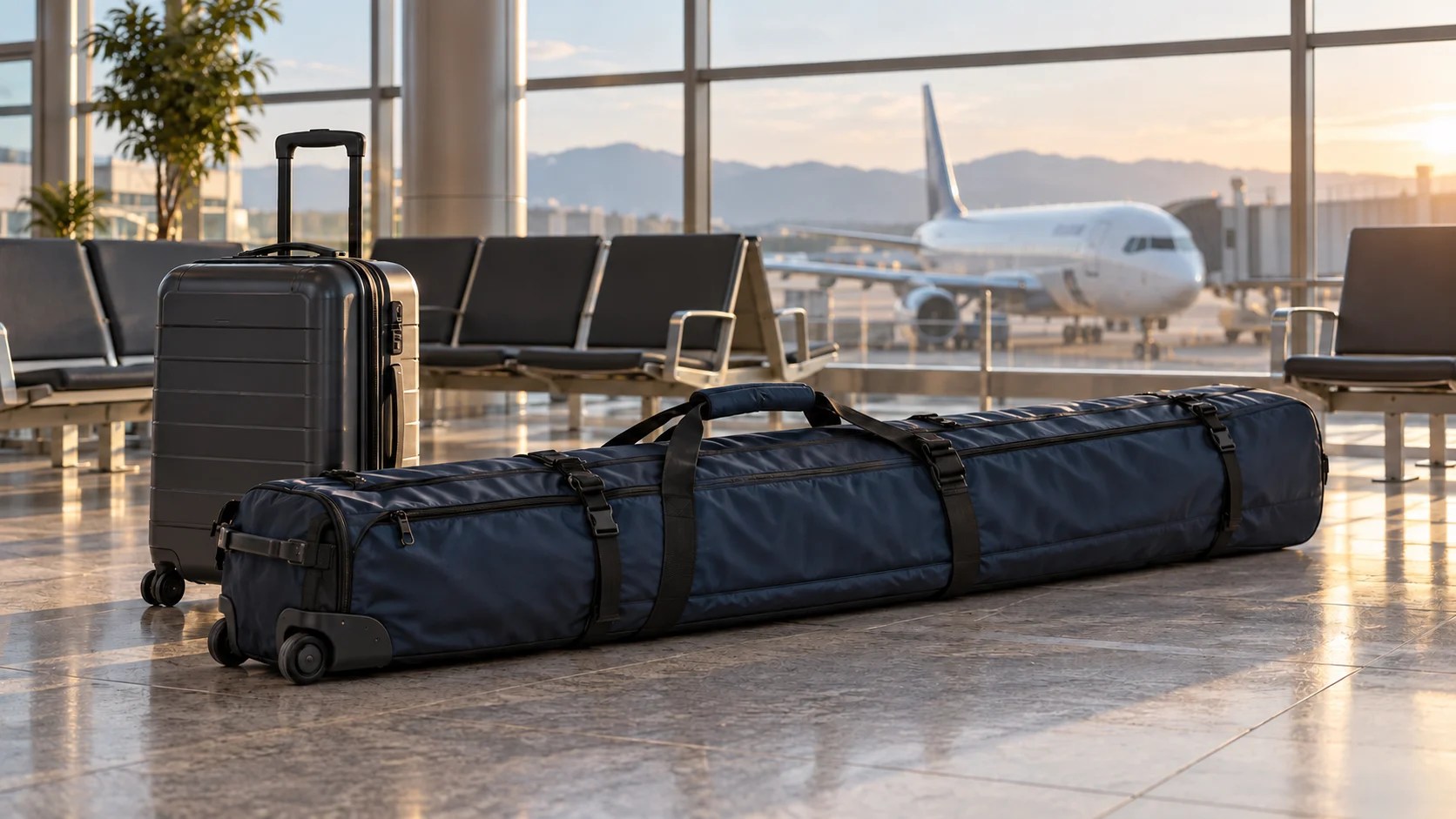
Flying with skis can be worth it when you love your own setup and have a straightforward travel day. Renting at your destination can make more sense when you want fewer bags, have limited vehicle space, or only plan to ski for part of your trip. The useful comparison is the entire journey: equipment, baggage, ground transportation, fitting, and the trip home.
You also have a third option to explore: travel with your own boots and arrange rental skis. That can preserve a familiar part of your setup while leaving the longest bag at home, provided the rental team confirms compatibility and arrangements beforehand.
Here is how to choose for a Park City or Jackson Hole vacation, check the airline details that matter, and build a plan that still works if your arrival changes. Airline examples below were checked in October 2026; verify your own itinerary before departure.
Choose the equipment plan that fits your trip
Start with what you actually want to ski on, then work outward to the airport. A skier who specifically wants their own skis has a different decision to make than someone whose gear happens to be sitting in the garage. Neither should choose solely because another traveler says checking skis is easy or renting is always cheaper.
| Your situation | Option worth considering | What to verify |
|---|---|---|
| You strongly prefer your own skis and boots | Bring your equipment | Airline rules, total bag weight, and transfer space |
| You want to travel with fewer bulky items | Rent at your destination | Package inclusions, fitting arrangements, and lodging address |
| You prefer your boots but are flexible about skis | Ask about using personal boots with rental skis | Boot compatibility, service arrangements, and the actual quote |
| Your trip mixes ski days with other travel | Compare rentals with carrying equipment throughout | Storage and transportation on every part of the trip |
| Members of your party have different needs | Choose separately for each skier | Who is bringing gear and exactly who needs rentals |
There is no requirement for everyone traveling together to make the same choice. One adult can bring a familiar setup while another rents. Children can rent even when their parents bring equipment. Make those decisions explicit before reserving transportation or paying for checked bags.
Count ski days separately from nights away
Write down the dates you expect to use equipment. A week away does not automatically mean a week of skiing. Travel days, visits with friends, and a day off the mountain can change the rental comparison. Check the rental terms for the period you need rather than multiplying an advertised daily rate by your hotel nights.
Then ask a second question: where would your own equipment go on the days you are not skiing? A ski bag may be easy to manage between an airport and one condo, but less convenient on a trip with several hotels or another destination afterward. Include those extra moves in the decision.
Read the ski equipment policy, not just the bag allowance
A regular checked-bag allowance does not tell you everything about sports equipment. Ski policies can explain how a ski bag and boot bag are counted, how weight is calculated, acceptable containers, and size limits. These details determine whether your planned combination of bags works.
Find the policy for the airline operating your flights and compare it with your reservation. If another carrier operates a segment, ask how the baggage rules apply to that itinerary. Repeat the check for the return journey, especially if you bought separate tickets or changed airlines.
Two airline examples show why the details matter
Delta’s published ski and snowboard guidance applies its baggage allowance and fees and considers the combined weight of the equipment bag and boot bag. Its page notes excess-weight charges when that combined weight exceeds 50 pounds. Review the complete Delta sporting equipment policy alongside your fare and itinerary rather than assuming two individually light bags meet the requirement.
Southwest’s snow equipment guidance allows up to two qualifying bags containing the listed ski or snowboard equipment to count as one item, even when separately tagged. It specifies that each bag must weigh 50 pounds or less to avoid an overweight fee. Standard checked-bag fees apply, while oversize fees are waived within its acceptance limits. Check the Southwest ski and snowboard baggage policy for the complete conditions and partner-airline guidance.
The point is the different treatment of the bags, not a recommendation to choose one airline. A boot bag and ski bag can look like the same travel setup while being assessed differently. Do not transfer an allowance from a past trip to a new reservation without checking it.
Save the answers you will need at check-in
- Which equipment combinations qualify under the airline’s sports policy?
- Does it assess weight per bag or across the qualifying combination?
- What container and size requirements apply?
- What checked-bag charge applies to your fare and bag count?
- Are there different rules for another operating carrier on the itinerary?
- Where should you take the equipment at your departure airport?
Keep the policy page and your baggage purchase confirmation accessible. Measure and weigh your packed equipment at home, including the case itself. A bag’s product description is not a substitute for the dimensions and weight of the bag you actually take to the airport.
Compare the full cost of bringing equipment
For a useful comparison, price the additional costs caused by each option. If you would check the same clothing suitcase either way, do not count that entire fee as a cost of bringing skis. If the skis create an additional bag charge, do count it. This keeps the comparison fair.
Use actual quotes for your travel dates. Baggage benefits, fares, bag counts, rental periods, and equipment choices differ too much for one universal break-even number. A friend’s trip total can be a useful reminder of what to check, but it is not your estimate.
| Cost or constraint | Bring your skis | Rent at the destination |
|---|---|---|
| Outbound equipment baggage | Enter the applicable charge | Usually no ski bag to check; price remaining luggage separately |
| Return equipment baggage | Check the return ticket independently | Confirm the equipment return arrangement |
| Travel case | Include a purchase or rental if needed | No ski travel case needed for destination equipment |
| Ground transport | Check whether bags change the vehicle required | Check capacity for your remaining luggage |
| Equipment rental | Include only rentals you still need | Use a quote for the chosen package and dates |
| Extras | List anything missing from your setup | Confirm helmets and other separately arranged items |
Add the priced items in each column, then consider the practical differences separately. You do not need to invent a dollar value for carrying a long bag through an airport. It is enough to decide whether the lower-priced option, if there is one, still gives you the travel day you want.
Make the comparison like for like
Compare equipment appropriate for the same skier and intended use. A basic rental package and a premium demo package answer different needs. If you are considering bringing personal boots, ask for the relevant rental arrangement and price; do not automatically subtract a boot charge from a complete package.
Also distinguish a new purchase from a recurring expense. Buying a travel case may be reasonable if you expect to use it on several future trips. For this vacation, though, it is still money you would need to spend. Keep that separate from the baggage fees you may pay again next time.
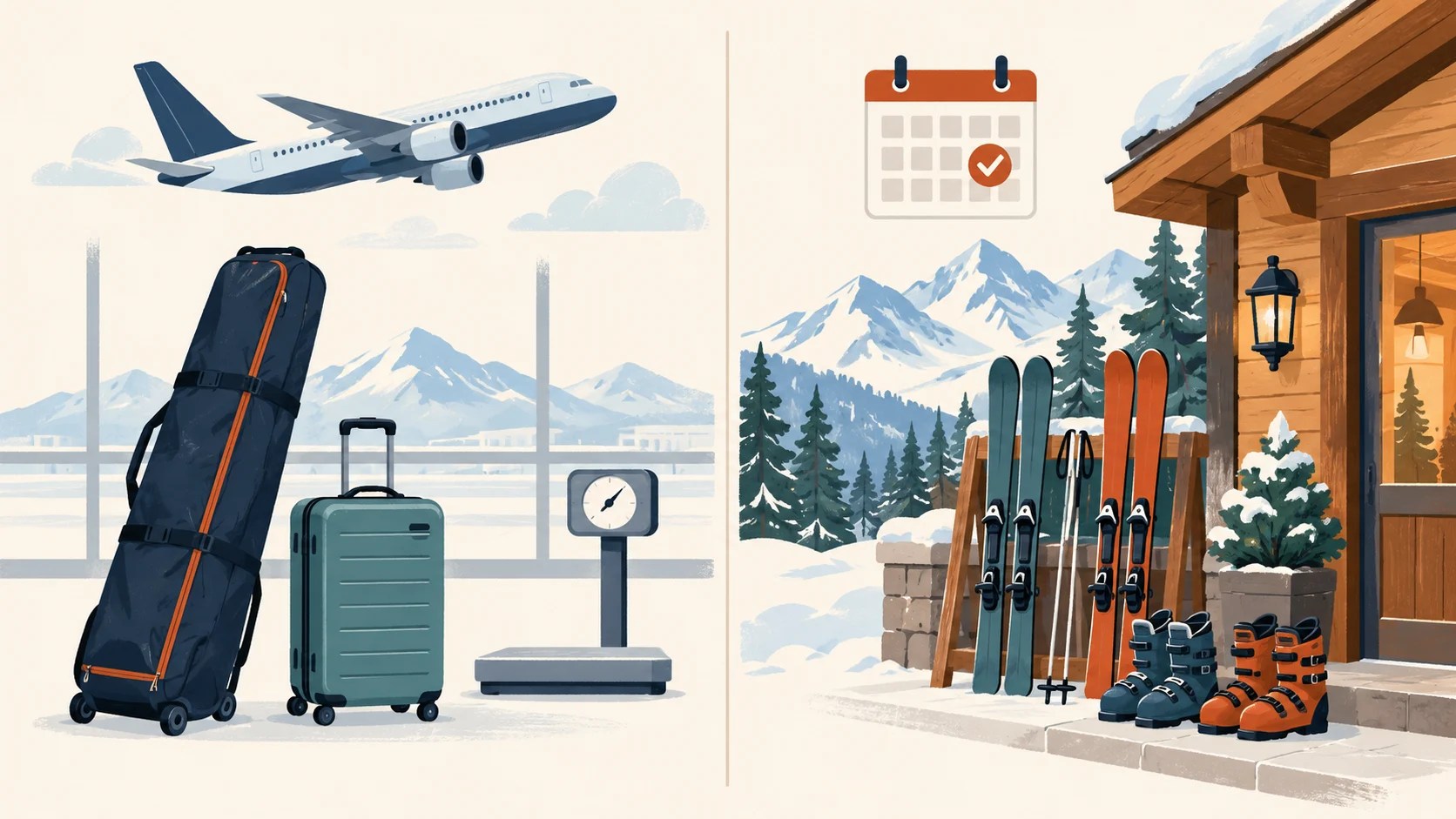
Bringing your boots can be a useful middle option
If you already have boots you enjoy skiing in, ask the rental team about using them with rental skis before you finalize your travel plan. Explain that you intend to bring personal boots, and provide the details the team requests. Compatibility and equipment setup need to be confirmed by the professionals handling your rental.
This is a planning conversation, not a reason to arrive with boots and assume any pair of rental skis will work. Do not adjust bindings yourself to make an unfamiliar combination fit. Get the arrangement confirmed while you still have time to choose a different plan.
Then decide how the boots will travel. If you want them in the cabin, check your airline’s carry-on size, weight, and item allowance for the fare you purchased. Measure the packed boot bag, not just the boots. A bag marketed for air travel does not automatically meet every airline’s cabin requirements.
Think about the rest of your hand luggage, too. A boot bag uses space and may count toward your permitted items. Work out where your other essentials will go and whether you can comfortably manage the bags through the terminal. If you check boots instead, include them in the airline’s applicable equipment weight calculation.
Check the transfer before committing to a long ski bag
Your equipment plan has to fit the vehicle as well as the plane. Give a shuttle or transfer provider the number of travelers, suitcases, and ski or snowboard bags when requesting transportation. Include the longest bag’s approximate length and ask how equipment is carried.
For a rental car, investigate luggage capacity with all required passenger seats in use. A photo of an empty cargo area can be misleading when everyone is seated. Avoid a plan that depends on folding a seat someone needs or holding equipment across passengers.
For Park City, trace the journey from your chosen airport to your actual lodging. For Jackson Hole, do the same from your arrival airport to the hotel, condo, or vacation home. The destination name alone does not answer the capacity question: the exact vehicle and luggage combination does.
Check the return transfer at the same time. A one-way airport pickup and a separately arranged return ride may use different vehicles. If one traveler leaves early, the equipment and luggage split may also change. Write down which bags travel with which people so the final morning does not become a rearranging exercise.
Ask your lodging where equipment belongs
Confirm the property’s ski storage arrangements and access instructions before arriving. Ask where bags can be kept, how guests enter the storage area, and what happens between checkout and the airport transfer. These questions matter whether you bring equipment or rent it.
If rentals are being delivered, confirm the lodging address and any relevant access details with the rental team. Do not assume an unattended lobby, porch, or storage room is the agreed handoff point. A clear arrangement helps keep your airport plans, property access, and equipment appointment aligned.
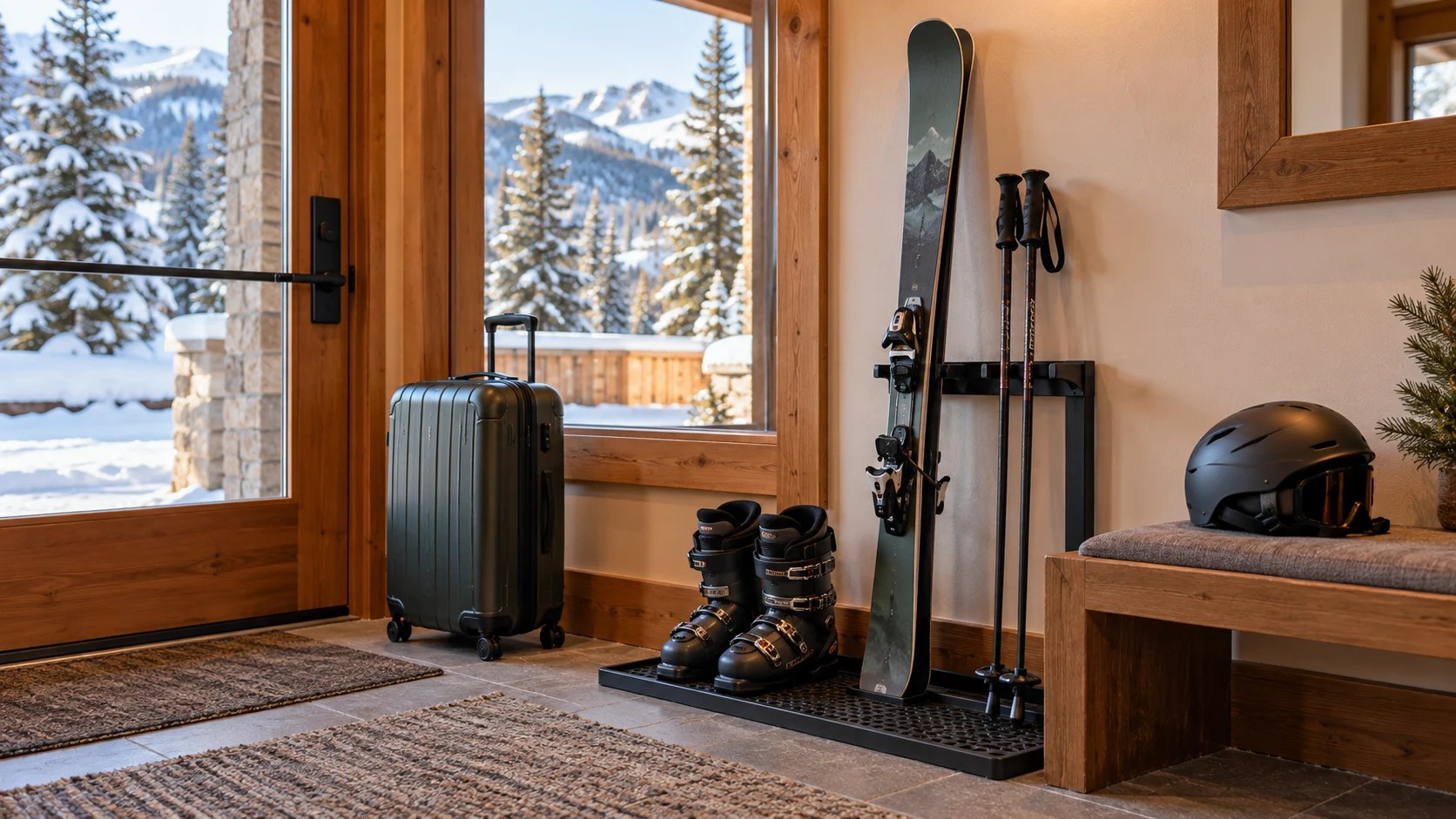
What destination rentals change in Park City and Jackson Hole
Renting locally removes the need to transport your rental skis through the airports. It still requires a reservation, accurate information about each skier, and a fitting arrangement. Those steps are easiest to handle before travel, while you can check details without juggling bags.
HWY 40’s Park City rental packages include adult and junior choices. Ski packages include skis, boots, and poles; helmets are a separate rental. Lift tickets and lodging are arranged separately. Choose for your actual ability and planned skiing, then confirm the package terms and total for your dates.
The Jackson Hole rental packages also offer adult and junior ski options, with delivery and fitting at lodging and pickup after the rental. Confirm your lodging location with the local team when arranging service. An airport arrival time alone is not a confirmed equipment appointment.
HWY 40’s rental delivery process starts with the number of packages and ski dates, followed by emailed documentation. Complete the requested information before your first ski day. Tell the team if you plan to use personal boots, and resolve that question before you leave your other equipment at home.
If a flight changes, contact the rental team with the revised arrival details and ask what arrangement is available. Do the same if your lodging changes. Avoid building the rest of your evening around an assumed delivery time or assuming a delayed arrival can always be accommodated immediately.
Build an airport plan with a little room to recover
Once you choose to bring equipment, make the airport steps concrete. Check your airline’s recommended arrival time and baggage acceptance deadline for your departure airport. Work backward from that guidance, allowing for the practical work of unloading, reaching the counter, and handling an equipment bag.
Before leaving home, photograph the packed case and its identifying details, add current contact information, and make sure you can recognize it among similar bags. Keep baggage receipts somewhere easy to retrieve. These are simple organizational steps that can help if you need to describe or locate a bag later.
Follow the airline and case manufacturer’s packing requirements. Check that the case closes securely and that straps or loose components are contained. Do not treat spare space as permission to add arbitrary items: confirm what is allowed in a qualifying ski bag and reweigh it after any changes.
If your equipment does not arrive with you
Use the airline’s baggage service process to report the problem and obtain the reference information it provides. Confirm how to receive updates and what delivery address to use. Keep relevant receipts and ask the airline directly about its procedures rather than assuming every replacement purchase or rental will be reimbursed.
If you need rental equipment while waiting, contact a local provider and explain the dates, equipment needed, and when you can attend a fitting. Availability must be confirmed; a backup idea is not a reservation. Keep your first ski-day plans flexible until you know what equipment you actually have.
If your flight arrives later than expected
Update the people whose arrangements depend on your arrival: transportation, lodging, and the rental team if applicable. Share the revised information when it is reasonably clear, then check what needs to change. A single message in your travel group does not automatically update a booked transfer or equipment appointment.
Decide with two realistic trip examples
A short trip with familiar equipment: You own skis you specifically want to use, your baggage allowance accommodates the packed setup, and your transfer has confirmed space. Bringing gear may be a good fit. The remaining work is straightforward: verify the return rules, prepare the case, and confirm storage at the property.
A trip with several stops: You plan a few ski days within a longer vacation, change hotels, and want to avoid carrying a long bag throughout. Destination rentals may fit better. If you prefer personal boots, ask about that option; otherwise compare complete packages. Confirm the fitting and return arrangements against your travel dates.
These examples are decision frameworks, not predictions about which option will cost less. Change the number of ski days, baggage benefits, or transfer requirements and the answer can change. The best choice is the one you can explain using your actual itinerary.
FAQ: Flying with skis
Is it cheaper to bring skis or rent them?
Compare your actual round-trip equipment baggage charges, any travel-case or transport costs, and the rental quote for your ski dates. Existing baggage benefits and the equipment you need can change the result. Neither option is always cheaper.
Do a ski bag and boot bag count as one checked item?
Some airlines treat a qualifying ski bag and boot bag as one item, but the contents, weight calculation, and fees vary. Read the sports equipment policy for your itinerary and check any partner-carrier conditions before packing.
Can I bring my own boots and rent skis?
Ask the rental team before booking or traveling. They need to confirm compatibility and the available arrangement for your boots. Do not assume every boot works with every rental binding or that bringing boots automatically changes the package price.
Can I take a boot bag into the cabin?
Check the airline’s carry-on rules for your fare and the dimensions and weight of your packed bag. A boot bag is not automatically an extra permitted cabin item. Plan your remaining hand luggage around the allowance that applies to your ticket.
What should I do if a flight delay affects my rental delivery?
Contact the local rental team with your revised arrival information and lodging details. Ask them to confirm the available delivery and fitting arrangement. Do not assume the original appointment can move automatically or that immediate service will be available.
Make the equipment decision before the travel day
Flying with skis works best when you have checked the bags, vehicle, and return journey as carefully as the outbound flight. Renting works best when you have confirmed the equipment, lodging address, and fitting plan before arrival. Bringing boots may offer a useful middle path once compatibility is confirmed.
Choose your plan, save the confirmations, and let the rest of your trip take shape around it. If you are arranging equipment in Park City or Jackson Hole, review HWY 40’s rental questions and answers and contact the local team about the details of your stay. Get the logistics settled so you can look forward to the skiing.