

Family Ski Trip Packing List: What to Bring and What to Rent
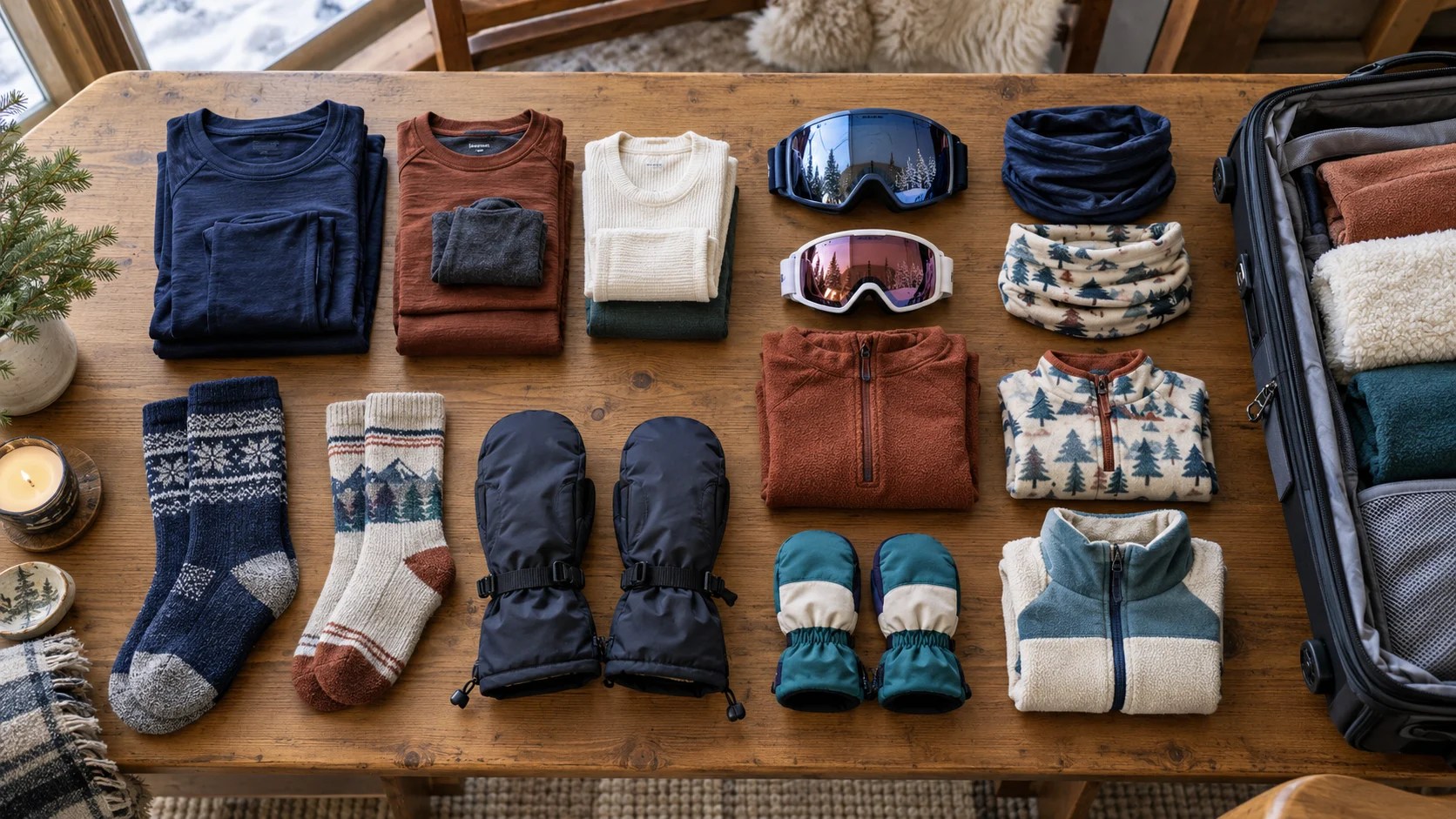
A good family ski trip packing list starts with a simple decision: bring your personal clothing and accessories, then decide which equipment you will rent. For a Park City or Jackson Hole vacation, that means packing layers, ski socks, waterproof outerwear, gloves, and goggles, while arranging skis or snowboards, boots, and helmets before you arrive.
The catch? A rental package does not cover every item your family needs. Neither does a lesson reservation. Before you zip the last suitcase, you want three things settled: what is coming from home, what is reserved at your destination, and what still needs confirming.
This guide walks through each part, with a checklist, a three-day packing example, and the small details that make getting children from breakfast to their first lesson much easier.
Your Family Ski Trip Packing List at a Glance
Use this table once for each skier or snowboarder. Check an item off when you have packed it or confirmed its reservation. A helmet sitting in an online shopping cart, for example, is still an unfinished job.
| Item | Bring or reserve? | Check before leaving |
|---|---|---|
| Base layers and a midlayer | Bring | Each person has a complete outfit that fits beneath their outerwear. |
| Ski jacket and snow pants or bibs | Bring or arrange separately | Try everything on together, including gloves and winter footwear. |
| Ski socks | Bring | Keep a pair accessible for the rental fitting. |
| Gloves or mittens and neck covering | Bring | Match the pairs; set aside children’s spares where you can find them. |
| Goggles | Bring | Check the strap and fit with the helmet you will use. |
| Ski helmet | Bring or reserve separately | HWY40 helmets are a separate rental. Confirm one for everyone who needs it. |
| Skis, ski boots, and poles | Bring or reserve a ski package | Match the reservation to the skier, destination, and dates. |
| Snowboard and snowboard boots | Bring or reserve a snowboard package | Check that you booked the right equipment for each rider. |
| Winter shoes and off-slope clothing | Bring | Plan for airport transfers, dinner, and time away from the mountain. |
| Personal essentials | Bring | Include toiletries, sunscreen, lip balm, glasses, and chargers. |
| Lesson and lift access details | Confirm separately | Save the booking, meeting location, check-in instructions, and ticket information. |
A family member who does not ski needs a different list. Give them suitable winter clothing and their own plans for the day, without automatically adding equipment or lift access they will not use.
What to Bring for Every Skier
Start with one complete outfit
Lay out an entire ski outfit before adding extras. It is easier to notice missing snow pants when everything is on the bed than when you are sorting through bags in a hotel room.
For the clothing itself, think in three layers: a moisture-wicking base layer, an insulating midlayer, and a protective outer layer. Merino wool or synthetic base layers work well; cotton is a poor choice for the slopes because it holds moisture and dries slowly. Waterproof snow pants and a suitable ski jacket belong on the list, along with insulated gloves or mittens and tall ski socks. REI’s guide to ski clothing explains how these pieces work together.
Then do the practical check. Can your child bend their knees in those pants? Does the jacket still close over the fleece? Can they find the zipper and put their hands into the mittens? Test the outfit before travel, while you still have time to replace something.
Keep accessories together
Gloves, goggles, neck coverings, and socks deserve their own packing space. A small pouch or cube for each person gives those easily scattered items a home. Keep goggles protected from keys, buckles, and other loose objects in your bag.
If you are renting helmets, bring your goggles to the fitting so you can check the combination. If you own helmets, try them with the goggles before packing. This is also a good time to notice a missing strap or a pair that no longer fits.
Pack for the hours outside ski boots
You will also need winter footwear for walking around town, comfortable clothes for the lodging, and whatever your family uses after a bath or shower. Check the accommodation’s amenities before packing bulky extras. If there is a pool, swimsuits may earn their space; if there is laundry, knowing how it works can change your clothing quantities.
What You Can Rent Instead of Packing
Start by assigning equipment to each person. One parent may bring familiar boots while the children need complete packages. A teenager might snowboard while everyone else skis. Write those differences down rather than booking from memory.
HWY40 ski packages include skis, boots, and poles. Snowboard packages include a board and boots. Helmets are available as a separate rental. Personal clothing and accessories should stay on your packing list unless you have made a specific arrangement for them.
For children, Junior Base is intended for first-time and beginner skiers. Junior Mountain is for youth ready for intermediate runs. Both ski packages include skis, boots, and poles. Choose around the child’s current skiing ability; ask the team if you are unsure which package suits them.
For a family with different experience levels, there is no need to put everyone into the same package. The useful question is what each person plans to ski. Describe that honestly, including anyone who is returning after a long break or taking their first lesson.
If you would like to bring your own boots and rent skis, contact the team about your particular boots before deciding what to leave at home. Do not assume every boot works with every rental setup, or that a different package price automatically applies.
Keep the equipment reservation separate from the rest of the vacation booking. HWY40 rental packages do not include lift tickets or lodging. Our ski rental FAQ explains the inclusions and provides contact information for confirming your plans.
Make a Small, Complete Kit for Each Child
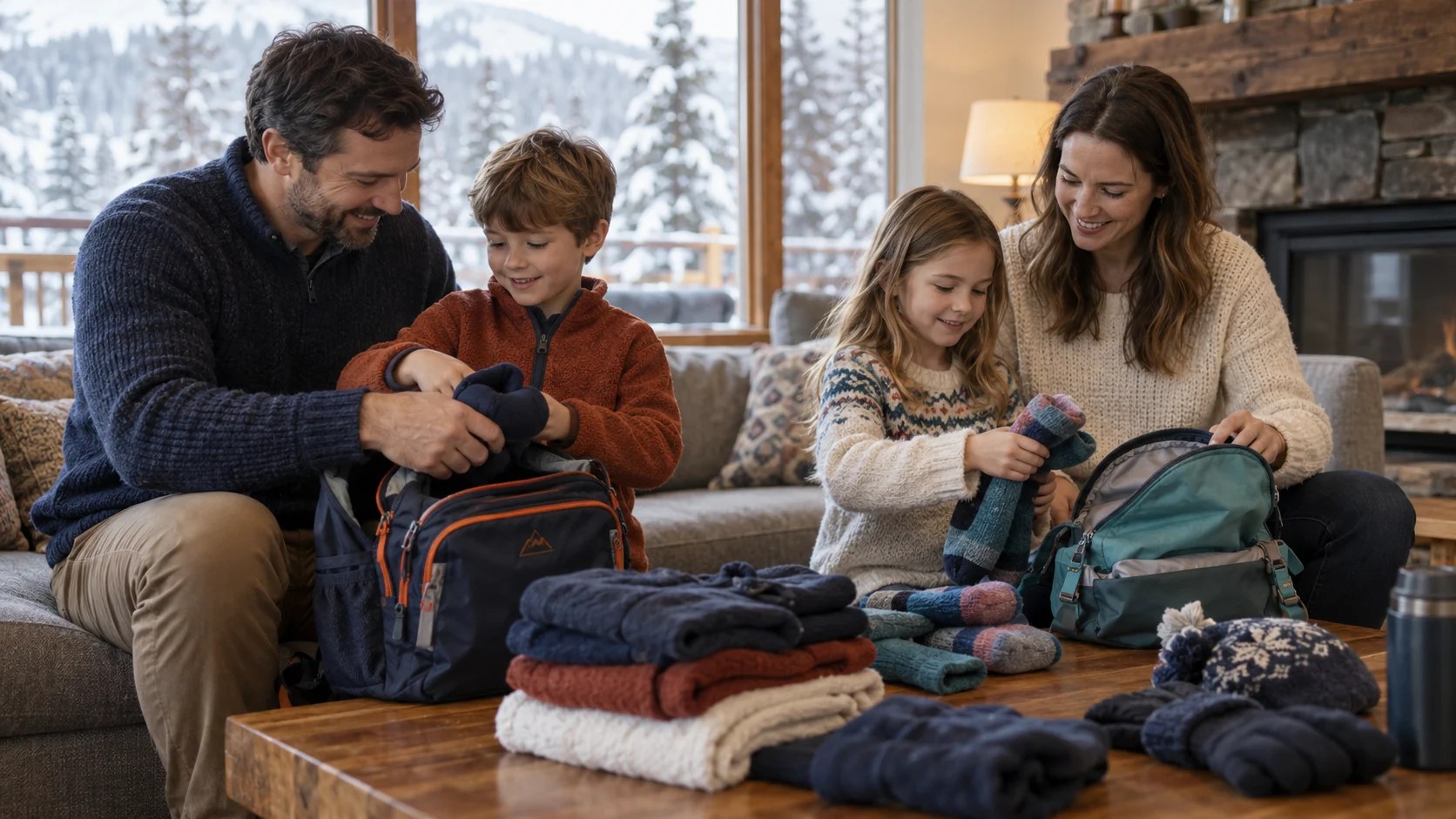
Children’s packing works best when another adult can find everything without a guided tour of the suitcases. Choose a bag, cube, or shelf for each child and keep the same arrangement throughout the trip.
Put a name on personal belongings that might end up in a lesson cubby or lost-and-found bin. Ask the rental team before attaching labels or making marks on rental equipment. A photograph of the family’s arranged gear can help you remember which items belong together.
Give spare items a job
A spare pair of mittens is useful when you can reach it. Decide whether backups will stay at the lodging, travel in an adult’s bag, or accompany the child to ski school according to the program’s instructions. Do the same for dry socks and a change of clothes.
Avoid packing a large assortment of extras without a plan. Think through the likely handoff: your child needs something dry, another adult is helping, and the bag is somewhere nearby. A clearly labeled pouch makes that situation easier.
Make the lesson plan part of packing
For each child, save the lesson confirmation, meeting location, pickup instructions, and any forms that need completing. Check what the specific program includes before you pack food or book additional services.
Jackson Hole Mountain Resort’s youth lesson guidance, for example, says lift tickets and equipment rentals are separate. Children can arrive with properly fitted and adjusted equipment already arranged. It also asks families to bring gloves and goggles, keep the JCard in a safe pocket, and label extra clothing for the Kids Ranch staff.
The practical takeaway is to check four things independently: lesson, lift access, equipment, and personal gear. A confirmation for one does not prove that the other three are ready. Keep those details available to whichever adult is doing drop-off.
A Three-Day Ski Trip Packing Example
The following is a starting point for one person skiing three days, with a place to dry clothing between outings. Adjust it for the forecast, laundry access, how often you want to change clothes, and the needs of the person wearing them.
- One complete outerwear set: ski jacket plus snow pants or bibs.
- Two base-layer sets: a practical rotation if you can wash or dry them as needed. Pack more when that will not work for your trip.
- One or two midlayers: choose pieces that fit under the jacket and can also be useful off the mountain.
- Four pairs of ski socks: one for each ski day and one spare.
- One main pair of gloves or mittens: add a spare pair for children, or anyone who would benefit from an immediate dry replacement.
- Goggles and a neck covering: keep these with the person’s other accessories.
- A helmet plan: either pack the helmet or confirm a separate rental.
- Off-slope basics: underwear, sleepwear, winter shoes, and a small selection of everyday clothes.
For a week-long vacation, extend the plan around laundry and drying rather than multiplying every bulky item by seven. Check whether the lodging has a washer, whether you need supplies, and whether you will realistically want to do laundry during the trip.
For a shorter trip, keep the complete outfit and reduce repeat clothing first. Removing an essential item is different from packing fewer spare outfits. The goal is a smaller bag that still contains everything needed to get dressed.
Travel days count, too. If you ski before checking out, reserve a bag for damp clothing and keep dry travel clothes accessible. Otherwise, the outfit you intended to wear home may already be buried under three days of vacation.
How to Pack for a Ski Trip Flight
Think about what you will need between leaving home and opening your suitcase at the lodging. Airport transfers, a cold arrival, and an unfamiliar check-in process are easier when the essentials are close at hand.
Within your airline’s baggage allowance, keep identification, travel confirmations, your phone and charger, glasses, and essential personal items accessible. Put a warm layer and gloves where you can reach them when you land. Parents may also want a compact change of clothes for a child and something familiar for the journey.
If you are bringing your own ski boots, check your carrier’s current bag dimensions, weight limits, and equipment rules before deciding how to transport them. A boot bag is not automatically a free additional cabin item. Treat checked skis and snowboards as their own packing task, with the airline’s requirements in front of you.
Renting equipment at your destination removes those reserved items from your luggage plan. It does not remove the need for personal clothing, accessories, or a confirmed fitting arrangement. Before the bags go into the car, compare what you have left at home with what actually appears on the rental reservation.
For families splitting across flights, make sure each traveling group has its own arrival essentials and booking details. If the adult with the reservation arrives later, someone already at the lodging should still know which team to contact.
Get Ready for Your Delivery and First Ski Morning
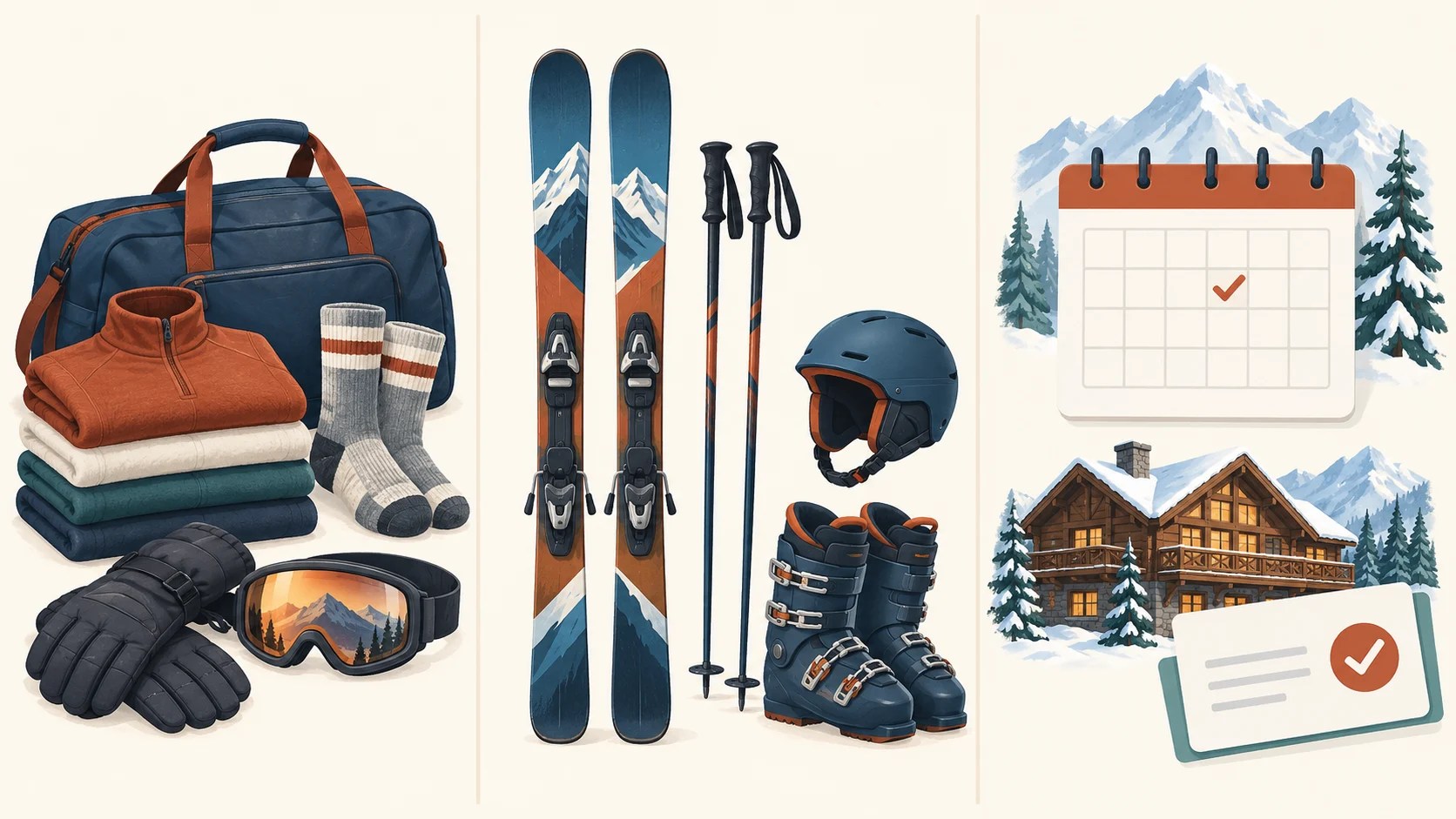
HWY40 delivers rental equipment to your lodging, fits it there, and collects it after your rental. The best preparation is to have the address, dates, equipment choices, and arrival arrangements clear before the fitting.
Start with the right destination. Families visiting Park City or Deer Valley can review our Park City rental packages. For a Wyoming vacation, use our Jackson Hole rental packages. Confirm your lodging address with the local team instead of assuming that a listing described as “near the resort” settles the delivery details.
Have these details ready
- Arrival and ski dates: keep your travel date separate from the first day you plan to use the equipment.
- Lodging address and access: include the correct property, unit, and relevant check-in arrangements.
- Each person’s equipment: identify ski versus snowboard packages and any separately requested helmets.
- The fitting arrangement: confirm when and where the group should be ready, with the people needing equipment present.
- Reservation documents: watch for the follow-up email and complete the requested information.
- Return arrangements: confirm pickup instructions before your departure day gets busy.
Our rental delivery process starts with the package count and ski dates, followed by emailed documentation. Forward the relevant information to the people who need to complete it instead of leaving the whole job with one traveling parent.
At the fitting, have the ski socks you intend to wear available. Bring out your own helmet or goggles when checking how everything works together. Tell the technician about discomfort or concerns while you are there, rather than waiting to see whether an obvious problem disappears on the mountain.
If a flight is delayed, your accommodation changes, or you need help with a boot, contact the local team. An updated plan is more useful than hoping the original arrangement will still fit your new arrival time.
Check the resort’s instructions separately
Park City Mountain’s lesson preparation page requires lift access and a winter-sport helmet for lesson participants under 18. It also distinguishes lesson locations, so check the base area shown in your booking. Follow the instructions for your actual resort and program; Park City Mountain’s guidance is not a substitute for Deer Valley’s or Jackson Hole’s.
The evening before skiing, set out tomorrow’s clothing, confirm the route to the meeting point, and put small accessories together. Decide who carries the spare items and who has the lesson information. Those are easy decisions to make while everyone is sitting down.
Family Ski Trip Packing List FAQ
What should each person pack for a family ski trip?
Pack a complete ski outfit, socks, gloves or mittens, goggles, a neck covering, and personal essentials. Add winter footwear and comfortable clothes for time away from the slopes. Decide separately whether you are bringing or renting skis or a snowboard, boots, and a helmet. Then check the lesson and lift access arrangements.
What can we leave at home when renting ski equipment?
Leave behind only the equipment you have confirmed in your reservation. With a HWY40 ski package, that means skis, boots, and poles; a snowboard package includes the board and boots. Keep personal clothing and accessories on your list. If you want to bring your own boots, discuss them with the team before finalizing your packing.
Are helmets included in HWY40 ski rental packages?
Helmets are available as a separate rental. Bring a suitable helmet or request one when arranging the rental, and check that the reservation includes everyone who needs one. Do not assume a child’s package automatically includes a helmet. Bring goggles so you can check their fit with the helmet being used.
How should we pack for a ski trip when flying?
Keep travel documents, essential personal items, and a warm layer accessible, within your airline’s baggage rules. Protect goggles and organize small accessories by person. Check current airline requirements before transporting your own boots or skis. Compare your rental confirmation with your packing list so nothing gets left behind based on an assumption.
Do children need to own equipment for ski lessons?
They do not need to own it, but they need the appropriate equipment arranged for their lesson. Check the program’s requirements and whether any rentals were actually purchased with the booking. Equipment, helmets, lift access, and lessons can be separate arrangements. Have everything fitted and ready according to the resort’s check-in instructions.
Pack the Personal Gear. Confirm the Rest.
Use this family ski trip packing list before departure, then make one final check against your reservations. Each person should have a complete outfit, the accessories they need, and a clear equipment plan.
When you are ready to reserve with HWY40, choose your destination, match the packages to your group, and confirm helmets and lodging details with the team. With those pieces settled, you can spend your arrival evening getting comfortable and getting ready for the mountain.